
SEO: How to boost your online visibility in 2026
By Aaron Stiff, Founder — Bury St Edmunds Marketing. Published: November 2024 | Updated: April 2026
If your business is not appearing on the first page of Google — or in AI-generated search answers — you are invisible to the vast majority of potential customers.
Research consistently shows that fewer than 1% of users click past page one of traditional search results. And with AI search tools like Google AI Overviews, ChatGPT Search, and Perplexity now answering queries directly, the competition for visibility has intensified further.
This guide explains what SEO is, what has changed, and precisely what you need to do to get your business found; whether your customer is searching on Google or asking an AI.
What is SEO and why does it still matter?
SEO stands for Search Engine Optimisation. It is the process of improving your website so that Google understands what your business does, who it serves, and why it should be recommended to people searching for your products or services.
When done correctly, SEO puts your business in front of people at the exact moment they are looking for what you offer. Unlike paid advertising, which stops working the moment you stop paying, good SEO compounds over time; pages that rank well continue to attract visitors for months and years.
For businesses in Bury St Edmunds, Suffolk, and across the United Kingdom this matters enormously. Your potential customers are searching for local services on Google every day. If your competitors appear and you do not, those customers go elsewhere.
What has changed: SEO, GEO, and AI search
In 2026, SEO alone is no longer the complete picture. Two additional disciplines now sit alongside it.
GEO — Generative Engine Optimisation is the practice of making your content visible and citable within AI-generated search results. When someone asks ChatGPT or Google's AI Overview a question, the AI synthesises an answer from across the web and may include links to sources it considers authoritative. Appearing as one of those sources is GEO.
AEO — Answer Engine Optimisation is the practice of structuring your content to directly answer specific questions your potential customers are asking, in a format that both humans and AI agents can quickly extract and use.
The critical point from Google's own guidance is this: the same foundational SEO practices apply to AI search. There is no separate rulebook. Content that is well-structured, genuinely helpful, and demonstrably authoritative will perform in both traditional and AI-driven search. What changes is the emphasis. AI agents are not browsing for links, they are hunting for clear, trustworthy answers to specific questions. Your content needs to provide those answers explicitly.
Step 1: Keyword research: What your customers actually search for
The foundation of any SEO strategy is understanding the language your customers use. Most business owners write content based on how they describe their own services, not how customers search for them. These are often different.
Traditional keyword research
Start with Google itself. Type a topic related to your business into the search bar and pay attention to the autocomplete suggestions. These are real searches real people are making. The "Related searches" section at the bottom of results pages shows variations Google considers closely related.
For a local business, you are looking for keywords that combine your service with your location: "marketing agency Bury St Edmunds," "SEO services Suffolk," "social media management West Suffolk."
Long-tail and question-based keywords
This is where the GEO and AEO shift matters most. AI agents process longer, more specific, conversational queries — not short keyword strings. A user asking ChatGPT for help does not type "SEO Suffolk." They ask: "How do I get my small business to appear on Google in Bury St Edmunds?" or "Is SEO worth it for a local service business?"
Build content around these real customer questions. They have lower search volume than broad terms but far higher intent, and they are exactly what AI agents prioritise when constructing answers. Some examples relevant to a business like yours:
How long does SEO take to show results?
What does SEO cost for a small business in Suffolk?
What is the difference between local SEO and general SEO?
How do I get my business to appear on Google Maps?
Dedicate sections of your content — or entire separate blog posts — to answering these questions directly and completely. This is the content AI agents cite.
Step 2: On-page optimisation: Helping Google understand each page
Title tags and H1 headings
Every page on your site should have a unique, descriptive title tag — the clickable headline in Google search results. It should include your primary keyword and be written for humans. Keyword stuffing actively harms rankings.
Your H1 — the main heading on the page — should align with your title tag and clearly state what the page covers.
Heading structure
Use H2 headings to break content into clear sections. Google and AI agents both use heading structure to understand what topics a page covers. A page with logical H2 sections, each covering a distinct sub-topic, signals depth and relevance. Think of your headings as the skeleton of your content: they should tell the full story even if someone reads nothing else.
Meta descriptions
The meta description appears beneath your title in search results. Google does not use it as a direct ranking factor, but it significantly affects click-through rate. Write a specific, accurate meta description for every page and every post. Do not reuse the same description across multiple pages.
Content depth and helpfulness
Thin content, pages with very little information, is one of the most common reasons websites fail to rank. Google's guidance is explicit: it rewards content that is helpful, reliable, and created for people first. A blog post of 200 words that exists primarily to promote your services is not helpful content. It will not rank in traditional search, and it will not be cited by AI agents.
For AI visibility specifically, content needs to demonstrate what Google calls E-E-A-T: Experience, Expertise, Authoritativeness, and Trustworthiness. This means writing from a position of genuine knowledge, backing claims where appropriate, being clear about who wrote the content and why they are qualified to write it, and keeping the content accurate and up to date.
Freshness signals
Search engines — and AI agents — give additional weight to fresh content. This does not mean rewriting everything constantly. It means returning to published content and updating it when information changes, adding internal links to newer related content, and publishing new material consistently. A blog post published and then abandoned signals a static, potentially outdated site. A post that is actively maintained signals an authoritative, engaged publisher.
Step 3: Local SEO: Dominating your Geographic market
For a business operating in Bury St Edmunds and Suffolk, local SEO is where you will see the fastest and most impactful results. Local SEO remains one of the clearest bridges between traditional human search and AI-driven discovery. When someone asks an AI agent to recommend a local service, it draws on the same local signals Google Maps uses.
Google Business Profile
If you have not claimed and fully optimised your Google Business Profile, this is the single highest-priority action available to you. It is free and directly controls how your business appears in Google Maps and the local results at the top of many search pages.
Ensure your profile includes: accurate business name, address, and phone number; opening hours; a thorough business description with relevant keywords; your service categories; and regular photo uploads. Google reviews are a significant local ranking factor: ask satisfied clients to leave one.
NAP consistency
NAP stands for Name, Address, Phone number. Google cross-references your business details across the web. If your address appears differently on your website, your Google Business Profile, and any directory listings, this inconsistency undermines local authority. Audit all your online listings and ensure the information is identical everywhere.
Local content
Create content that is genuinely relevant to your local market. Pages and blog posts that naturally reference Bury St Edmunds, Suffolk, and the surrounding area signal geographic relevance. This is not about forcing location keywords into every sentence, it is about writing content that actually serves a local audience.
Step 4: Structuring content for AI search
This is the section most businesses are currently ignoring, which is precisely why addressing it now is a competitive advantage.
AI agents do not browse your site the way a human does. They process your content at speed, looking for clear signals of relevance and authority. The content that gets cited in AI-generated answers shares several characteristics:
Direct answers to specific questions
Structure your content so that questions are answered clearly and close to where they are asked. If your heading is "How long does SEO take to work?", the answer should follow immediately, not after three paragraphs of context. AI agents extract answers, they do not read for pleasure.
Clear structure and signposting
Use headings, short paragraphs, and logical flow. Information foraging theory — the principle that both humans and AI agents scan for signals of relevance before committing to read — means your content needs to communicate its value within the first few seconds of contact. Clear titles, visible headings, and concise opening sentences are not stylistic preferences, they are functional requirements.
Demonstrated authority
Include named authorship with verifiable credentials. Link to credible sources where appropriate. Be specific rather than vague — general claims carry less weight than specific, evidence-backed statements. An AI agent assessing whether your content is worth citing will look for the same trust signals a discerning human reader would.
FAQ sections
Adding a concise FAQ section to blog posts that covers the most common questions on the topic serves two purposes: it directly answers the queries AI agents are processing, and it can trigger FAQ rich results in traditional Google search, increasing your visibility in results pages.
Step 5: Technical SEO: The infrastructure that makes everything else work
Site speed
Page speed is a confirmed ranking factor. Test your site using Google's PageSpeed Insights tool (pagespeed.web.dev) and address any critical issues. Common culprits are oversized images, render-blocking scripts, and uncompressed files.
Mobile optimisation
Google uses mobile-first indexing. It primarily uses the mobile version of your site to determine rankings. Over 60% of internet traffic now comes from mobile devices. Test your site on multiple devices.
HTTPS
Your site must be served over HTTPS. An insecure site is flagged in browsers as "not secure," which damages trust and may affect rankings.
XML Sitemap
Submit your sitemap to Google Search Console to ensure all your pages are discovered and eligible for indexing. Without a submitted sitemap, Google has to find your pages by following links, which is a slower and less reliable process.
Structured Data
Structured data is code added to your pages that helps Google understand content in greater detail. For a blog post, BlogPosting schema markup tells Google who wrote it and when. For a local business, LocalBusiness schema helps populate your knowledge panel. Adding FAQPage schema to posts that include FAQ sections makes you eligible for FAQ rich results in search. expanding the space your result occupies on the page.
Step 6: Building authority
Google treats links from other websites as votes of confidence. The more credible sites that link to you, the more authority your domain accumulates.
Legitimate strategies for local businesses include: directory listings in credible local directories; coverage in local publications such as the Bury Free Press; membership of professional trade bodies with directory listings; and publishing genuinely useful content that other sites naturally want to reference.
Avoid purchased links and any scheme that artificially inflates link count. Google's spam detection is sophisticated and penalties are severe.
Step 7: Measuring performance
Google Search Console
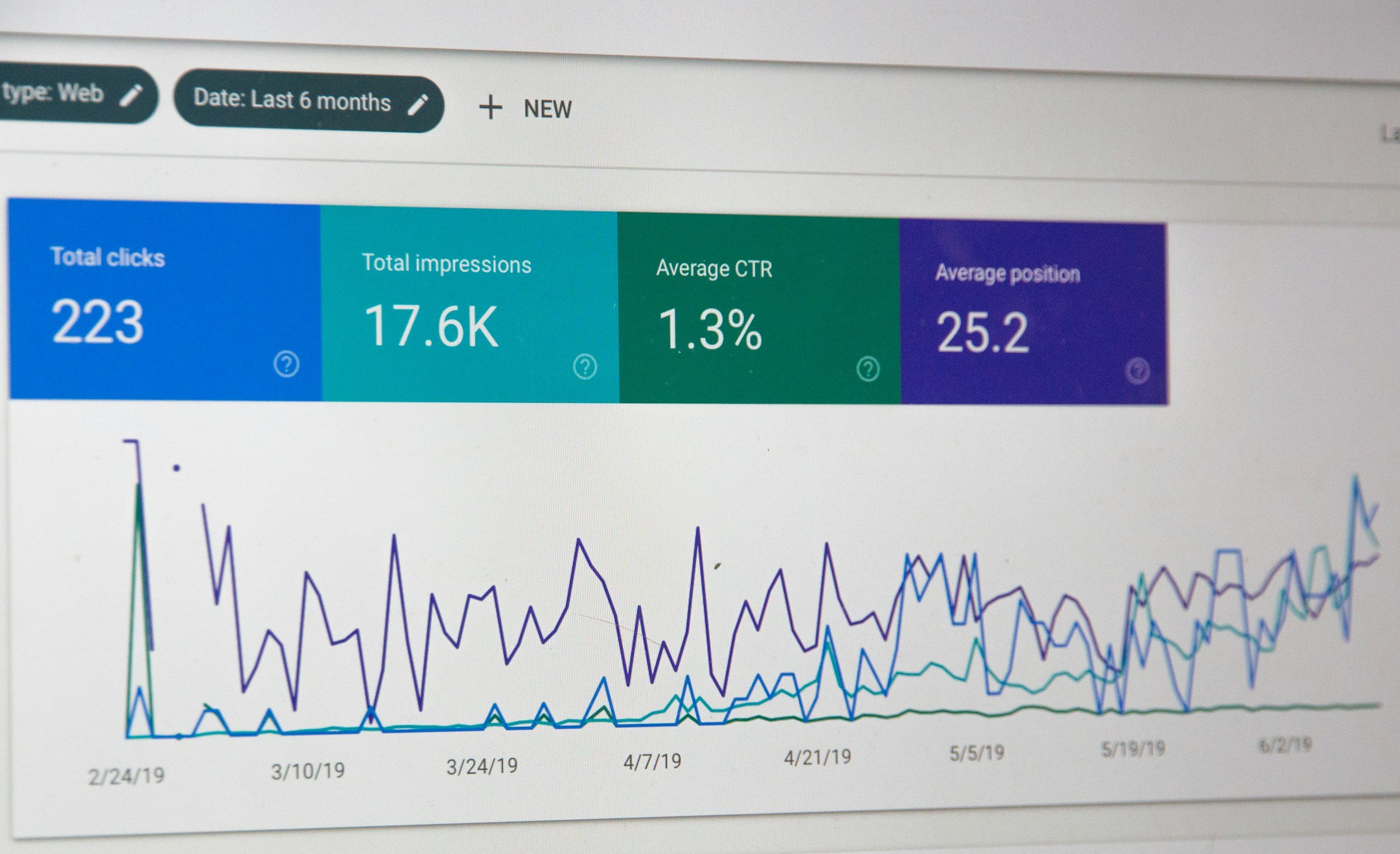
Shows which queries generate impressions and clicks, your average position in results, which pages are indexed, and any technical errors Google has encountered. Check it monthly. The Performance report filtered by page shows how any individual URL is performing.
Google Analytics
Shows what happens after a visitor arrives: how long they stay, which pages they visit, and whether they convert into enquiries or customers.
Beyond traditional metrics
With AI search now a significant channel, consider testing your own visibility. Search as your customer would search. Ask ChatGPT or Google AI Overview the questions your customers are asking. Is your business appearing in the answers? Is your content being cited? This qualitative check sits alongside your quantitative data and tells you whether your GEO efforts are working.
Frequently asked questions about SEO
-
For a new or low-authority site, expect three to six months before meaningful organic traffic begins. Local SEO: Google Maps and local pack results, tends to respond faster, particularly if your Google Business Profile is fully optimised. Content on an established site can rank within days or weeks.
-
Costs vary significantly. DIY SEO using free tools costs time rather than money. Professional SEO services for a local business in Suffolk typically range from a few hundred to over a thousand pounds per month depending on scope and competition. The return, when the work is done correctly, typically justifies the investment over a 12-month horizon.
-
Yes. AI search draws on the same underlying web content that traditional search indexes. A page that ranks well in Google is also more likely to be cited by AI agents. Good SEO is the foundation on which GEO and AEO sit. Not a separate or competing discipline.
-
General SEO targets broad queries without geographic specificity. Local SEO targets searches with location intent — "near me" queries, searches that include a town or city name, and Google Maps results. For businesses serving a defined geographic area, local SEO typically offers better return on investment because competition is lower and intent is higher.
The bottom line
SEO is not a one-time task. It is an ongoing process of improving content, fixing technical issues, building authority, maintaining freshness, and adapting to how search evolves. In 2026, that evolution now includes AI search — and the businesses that understand this early will hold a significant advantage over those still optimising for 2019.
The businesses that rank consistently and appear in AI-generated answers are not there because of tricks. They are there because they have invested in content that genuinely helps their audience, a technically sound website, and a credible, consistent presence across the web.
If you want help building that for your business in Bury St Edmunds, Suffolk or anywhere across the United Kingdom, get in touch with us here or explore our full range of marketing services to see how we work.
Written by Aaron Stiff, Bury St Edmunds Marketing. Aaron works with small and medium-sized businesses across Suffolk to improve their online visibility through SEO, content marketing, and social media.